The True, the Good, and the Beautiful in the Script of the New Feature Film „Keep Your Secret!“ (Warning: Spoilers Ahead!)
Kristina Schippling and Ezra Tsegaye are currently producing not just an entertaining vampire feature film full of suspense; in the script’s narrative and character development, Kristina explores various definitions of what can be considered Good or Evil within a moral code. Is goodness tied to morally correct actions, or is it a specific goal to be achieved? Is goodness something inherent, or does it have to be constantly redefined? Or perhaps goodness is the feeling of empathy for others that prevents us from doing harm, while moral and rational categories are culturally constructed and interchangeable?
Kristina skillfully raises these questions by letting her characters experience them firsthand: Lilith, in her pursuit of redemption from her existence as a vampire, seeks out holy babies to kill for her salvation. While her goal is righteous, her methods are not just immoral but the most gruesome imaginable. Elias, on the other hand, tries to do everything right but struggles to comprehend that his best friend and his girlfriend are harboring dark secrets. Yet, his empathy—even for the baby-murdering vampire—alone has the power to save him, his girlfriend, and the child. Moral correctness and ethical actions evolve into a new understanding of goodness—one that is now tied to compassion. This empathy prevents individuals from harming others and appears to be the very origin of goodness.
Kristina also questions the nature of evil. Linus, for example, is caught in a web of love and jealousy. Unable to be Mary’s true partner and reduced to being part of an affair, he entangles himself with Lilith to provoke Mary’s jealousy. Though he ultimately wins her love, it is only for a fleeting moment before he must pay for his mistakes. But is he truly evil, or is he simply someone who has loved too deeply in a painful and unfulfilling situation—passing that pain onto other women? And how morally righteous was Elias when his younger brother fell from the roof? Is a person inherently evil, or is evil something they are shaped into by experience? The script’s answer is clear: people are made into what they become.
Even Lilith was once a pregnant woman carrying sacred signs. When she lost her child, the ritual that could have freed the vampires was no longer possible. Just like Lucifer as the fallen angel, Lilith was once among the holy before she was turned into a vampire.
Through the main characters, their actions and experiences, their beliefs, and their emotional worlds, Kristina spells out different understandings of good and evil, as well as varying value systems. This is visually reflected in a scene where two pictures hang in the bathroom of the vacation apartment—one showing a child with angelic features, the other having demonic traits. But it is the same child. The directors suggest that good and evil are variable concepts. What may seem good from one perspective can be seen as an evil act from another. They also emphasize that every human being carries both light and darkness within them, capable of both good and evil in equal measure. The question remains: which side do we let win? Can we always clearly distinguish between what is good and what is evil?
Kristina and Ezra want to provoke thoughts and remind us that judgments about others should be made with care. Even the title „Keep Your Secret!“ hints at dark secrets and lies. Each of the main characters harbors secrets that are gradually revealed, touching on one of the most fundamental philosophical concepts: truth. The search for truth, the act of concealing and revealing it, and the moral philosophical questions that arise in connection with it are central to the film. The overarching theme is truth, which is closely linked to the question of goodness.
Kristina’s themes directly connect to Plato’s classical triad of the True, the Beautiful, and the Good. The distinction between holy and demonic figures in the film serves to elevate and emphasize good and evil, but also to question them. This is evident not only in character development and plot but also in the casting choices. Kristina and Ezra deliberately cast the role of the saintly Mary with Indian actress Anamika Datta, while the traditional blonde angel (Isabel Dornheim), who would have been a more conventional fit for the image of the Christian Virgin Mary, plays the vampire. This casting choice deliberately subverts expectations and challenges stereotypes, inviting reflection and warning against premature judgments.
The theme of truth is already hinted at in the title. Dark secrets, mirrored in the artwork on the walls of the vacation home, accompany the unfolding events. The truth is always present—not necessarily hidden but there for those willing to see and decipher it. In the characters’ lives, however, it is obscured by lies, only to be unintentionally brought to light. The revelation of each character’s secrets serves as crucial plot points, deeply woven into the core narrative. The exposure and concealment of truth drive the entire story—from the hidden affair and the secret child to the concealed magical powers of the vampire. The question of truth is ever-present.
And what about beauty? The aesthetic dimension is, of course, embedded in the very art form of film itself. But beauty is also explored through desire, unfulfilled love, and longing. The allure of the over-300-year-old vampire, veiled in a nightgown before the young Linus, the revealed beauty of the young man—these elements captivate us. There is also beauty in language, in the poetic scenes of Lilith’s hunt, and in the meticulously composed cinematography. The question of beauty arises everywhere.
A crucial moment in the script underscores this: Lilith prepares herself for bed, transforming her entire appearance—makeup and hairstyle—into the style of the 1920s and 1930s for her new lover. Her centuries-old existence and Linus’s youth are starkly contrasted in their intimate encounter. She is dominant, untamable; he is subordinate. Her sexuality, shaped by another era, is revealed through her choice of traditional nightwear, her act of beautification, while her vampiric nature manifests in her strength, dominance, and superiority.
In this way, Plato’s triad of the True, the Beautiful, and the Good is explored in the script with incredible depth and complexity. From the overall plot and character arcs to the film’s set design, makeup, costumes, and title—every element consistently points back to these three fundamental philosophical categories.
However, Kristina and Ezra do not simply reinforce clichés. Instead, they break stereotypes and challenge their validity. This questioning is deeply philosophical in nature. The directors successfully craft a genre film with high entertainment value that, on the surface, seems effortless and engaging, yet is interwoven with profound philosophical depth.
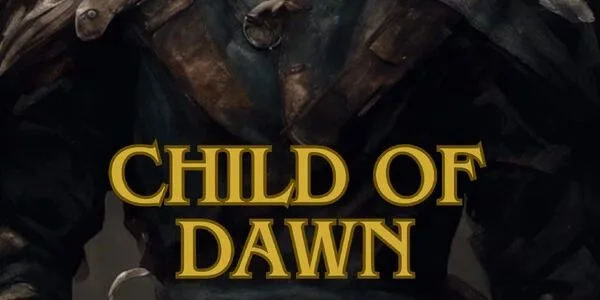
One of the most fascinating aspects is seeing how philosophical categories are translated into cinematic art. This coding of philosophy into art is a recurring theme in Kristina’s work. Likewise, Ezra’s strong influence from classic genre cinema, structured storytelling, humor, and high-quality aesthetics are evident in both the film’s poster (designed by Ezra) and the script.
We eagerly anticipate this film! The script alone is already a masterpiece!
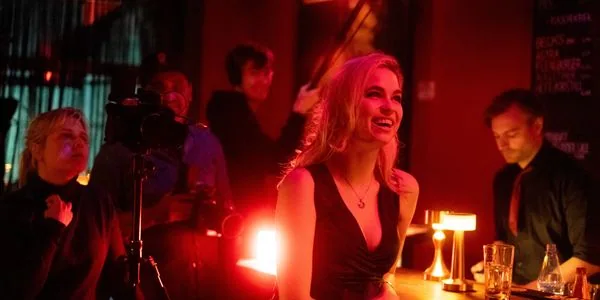
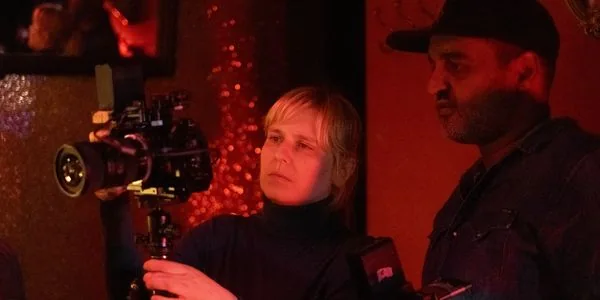
Poster: Ezra Tsegaye / Photos from the movie shoot: Nicolai Froundjia